Can you wild camp on a canoe trip in Dalsland?
Short answer
Yes. Sweden's right of public access (allemansrätten) lets you pitch a tent for a night or two away from houses, and the Dalsland–Nordmarken lake system has about 100 DANO campsites with wind shelters, fire pits and toilets. To use those campsites you need the nature conservation card (80 SEK per person per night in 2026). From 1 June to 31 August fires are only allowed in the campsite fire pits.
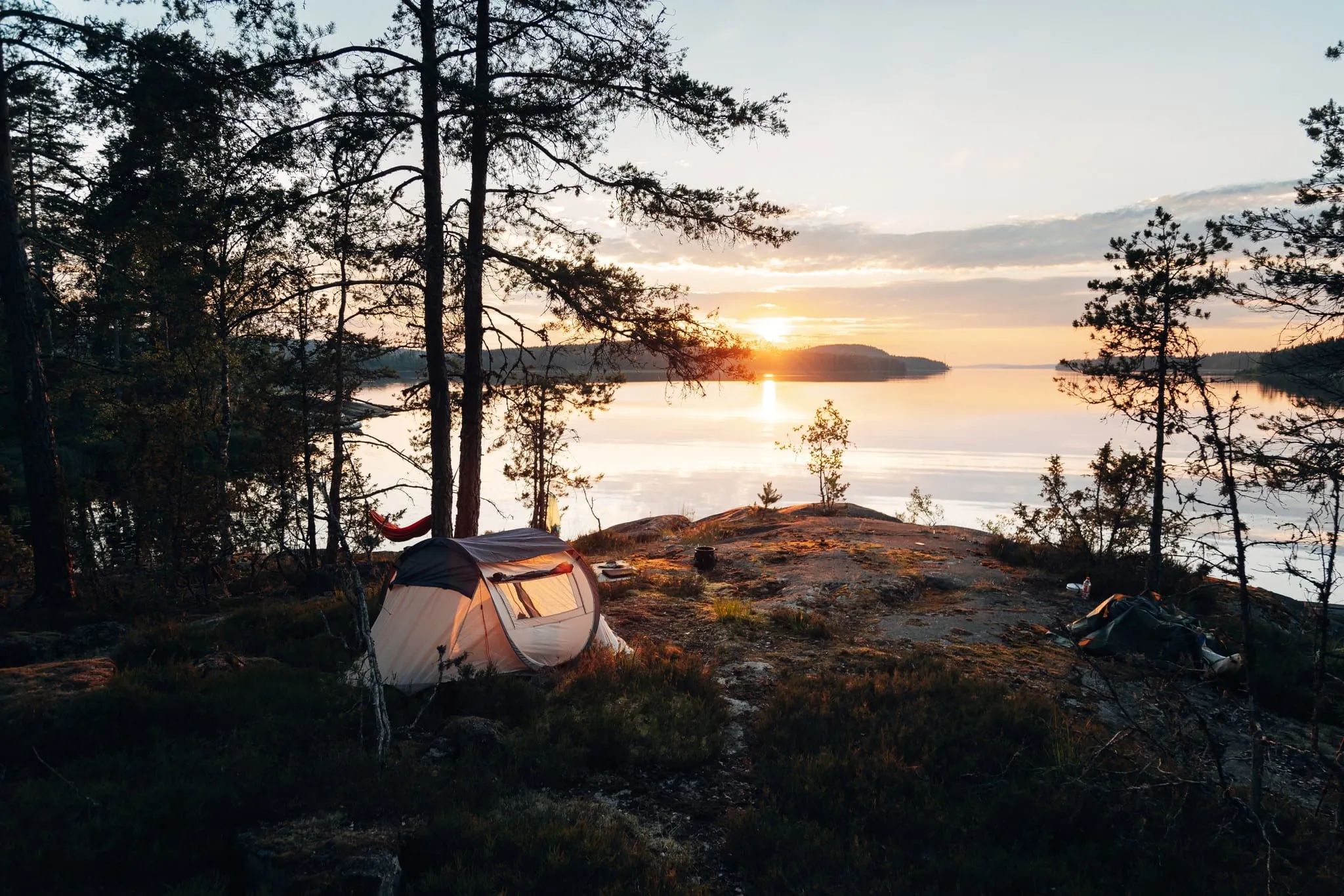
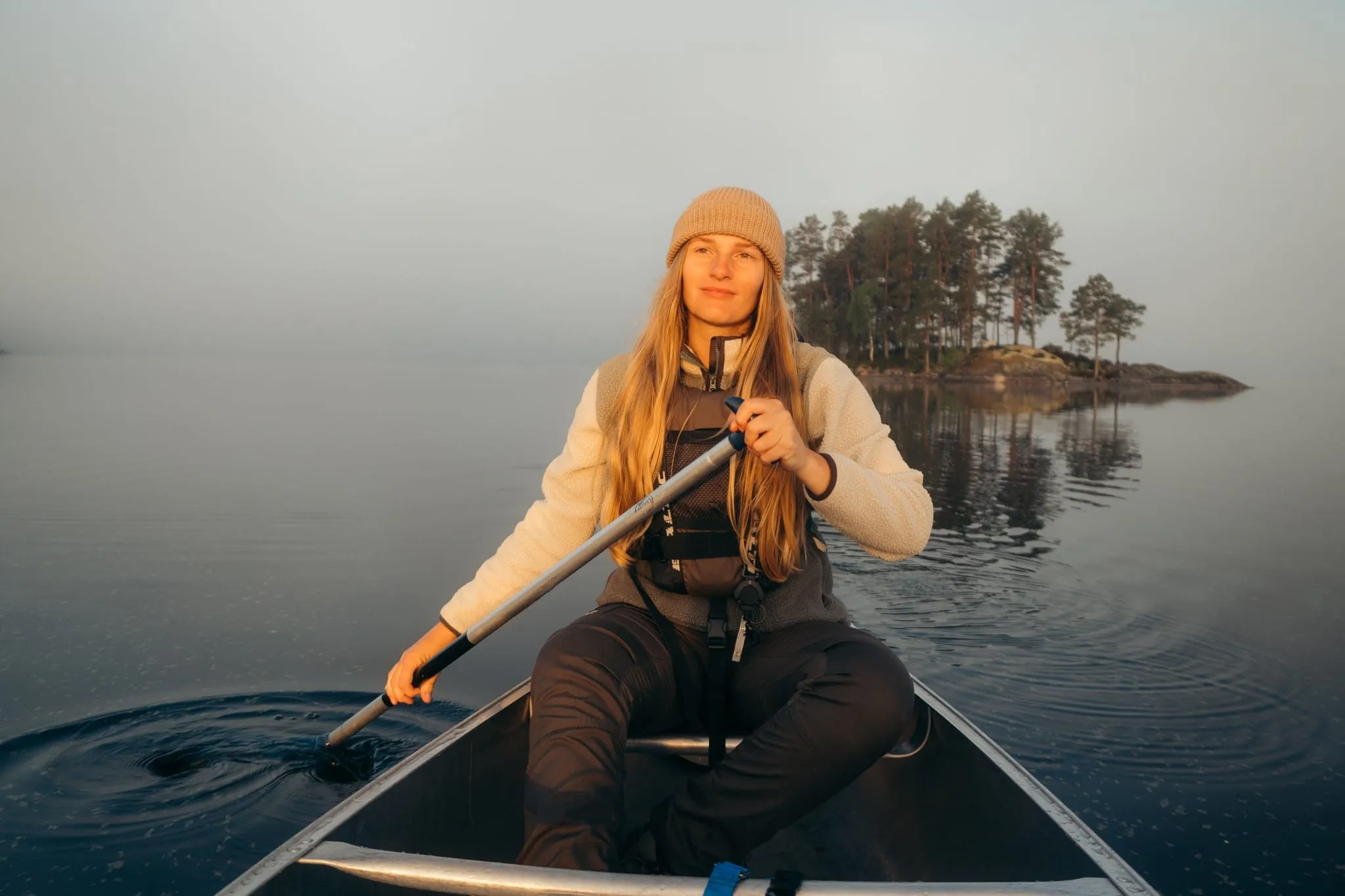
Sleeping by the water is the point of a canoe trip in Dalsland, and the rules make it easy. You have two options: camp anywhere suitable under the right of public access, or use the campsites DANO maintains along the lakes.
The right of public access
Allemansrätten gives everyone the right to move through and stay in Swedish nature, as long as you do not disturb or destroy. For camping, Naturvårdsverket (the Swedish Environmental Protection Agency) gives these guidelines:
- One or two nights in the same spot. It is a rule of thumb, not a fixed legal limit.
- Two or three tents. Larger groups need the landowner’s permission.
- Out of sight and earshot of houses. People living nearby should not be able to see or hear you from their home.
- Not on farmland, grazing land, or soft ground with sensitive plants.
- Special rules in nature reserves and national parks, where tents are often limited to marked sites.
In return, take all your rubbish home, never break branches off living trees, and leave no trace of where you slept.
The DANO campsites
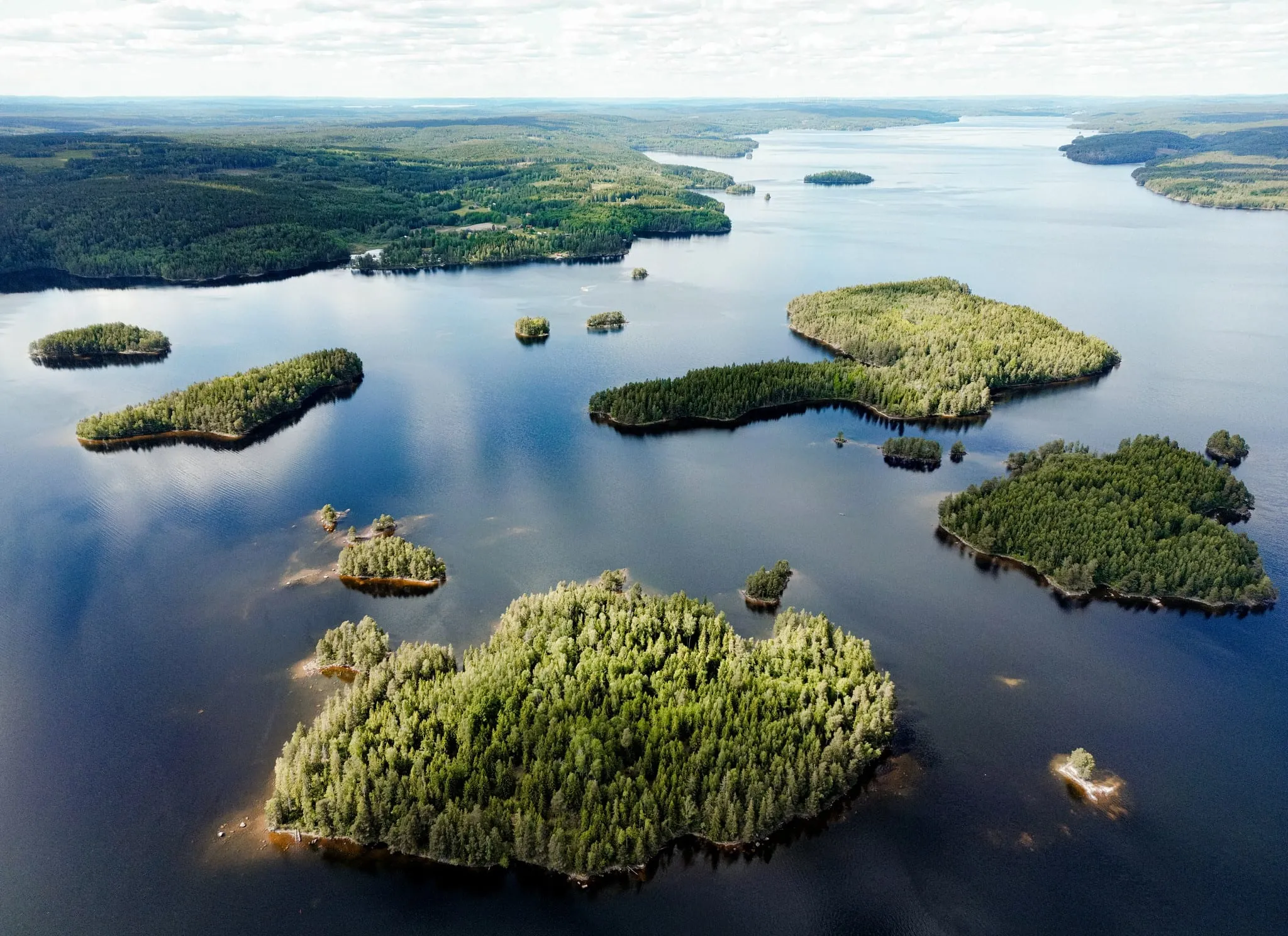
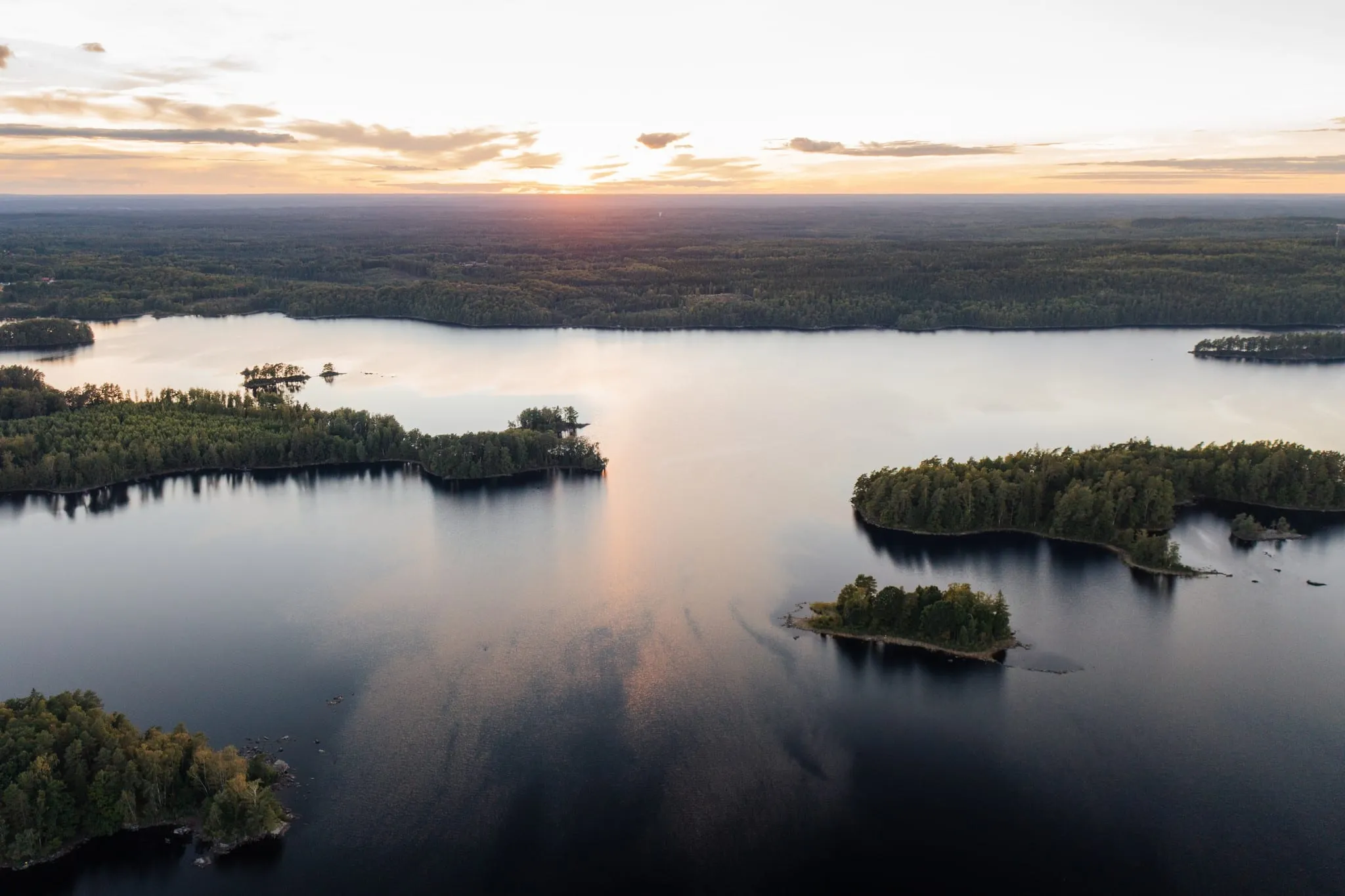
DANO, a non-profit association of landowners, canoe rental companies and municipalities, runs about 100 campsites along the lakes of the Dalsland–Nordmarken system. They sit on islands and points along the canoe routes and are marked on the canoe maps.
What you find there:
| Facility | Where |
|---|---|
| Fire pit | Every campsite |
| Dry (composting) toilet | Nearly every campsite |
| Wind shelter (vindskydd) | Most campsites |
| Firewood | Usually, you split it yourself |
| Tent pitches | A few campsites |
On the two lakes either side of Gustavsfors, for example, Lelång has 15 campsites and Västra Silen 8. All but one of them have a wind shelter.
The rules for the campsites:
- One night per campsite. Then you move on.
- No reservations. First come, first served, so arrive early in July.
- Groups of more than five must use the DANO campsites when they stay overnight.
- Rubbish goes with you. There are no bins on the campsites.
- Bird protection areas are closed for landing; keep at least 100 m from the shore. They are marked with red and yellow signs and on canoe maps.
The nature conservation card
The nature conservation card (naturvårdskort) pays for the campsites. It funds firewood, toilets, maintenance, rangers and compensation to landowners.
- Price: 80 SEK per person per night in 2026. Children under 12 go free. Check the 2027 price before you buy.
- Where to buy: online at dalslandnordmarken.se, at tourist offices and at the canoe rental bases.
- Checks: DANO rangers check cards on the water. Without one, you pay the card plus an administration fee on the spot.
The card does not reserve a place, and unused nights are not refunded. More in The Dalsland–Nordmarken nature card.
Fire rules and fire bans
- 1 June to 31 August: a general fire ban applies in the DANO lake system. You may only light a fire in the built fire pits on the campsites.
- Outside that period: still only in the campsite fire pits.
- Total fire ban: in dry spells the county or municipality can ban all open fire, fire pits included. Camping stoves are usually still allowed, but read the decision.
- Never on bare rock. The heat cracks it and leaves scars for decades.
You are responsible for checking the current situation. Use the Brandrisk Ute app or the map on krisinformation.se, which shows current fire bans by municipality. In Värmland, a red flag with a yellow cross is raised at several points when a ban is in force.
Toilets and water
Use the campsite toilets for toilet use only. Away from a campsite, bury waste and paper well away from the water, which is why a small spade belongs in your pack. Most paddlers draw lake water for cooking; boil or filter it before drinking.
Wild camp or campsite?
| DANO campsite | Your own spot | |
|---|---|---|
| Cost | Nature card | Free |
| Wind shelter, toilet, firewood | Yes | No |
| Campfire | In the fire pit, unless there is a total ban | No |
| Group size | Any (over 5 must use them) | Two or three tents |
| Privacy | Shared with other paddlers | Usually alone |
Most trips mix both: campsites most nights, and your own spot when the next campsite is taken or too far.
Where we would start
From Outpost North in Gustavsfors, Lelång and Västra Silen, with 23 campsites between them, start at the jetty. Its canoe package starts on any day you choose, lasts 1 to 14 days and includes the nature card, a route in an app and a map of the lakes. You can sleep at the camp before and after your trip. The Canoe Trip, which starts there, includes the nature card and a map with the campsites marked, for six nights of wild camping. For gear, see What to pack for a canoe trip in Dalsland.
Sources
Naturvårdsverket: camping and tents, Naturvårdsverket: the right of public access, DANO: nature conservation card, DANO: campsites, DANO: regulations, Länsstyrelsen Västra Götaland: fire risk and fire bans, Krisinformation.se.