Is a canoe trip in Dalsland hard? Beginners, kids and fitness
Short answer
A canoe trip in Dalsland is not hard for healthy beginners: the lakes have no current, the locks replace most carrying, and 10–15 km a day is enough for a good trip. Wind on the long lakes such as Lelång and Stora Le can make it hard, so plan short days, stay near the shore and keep a spare day. Children and dogs are fine with life jackets, and everyone should be able to swim.
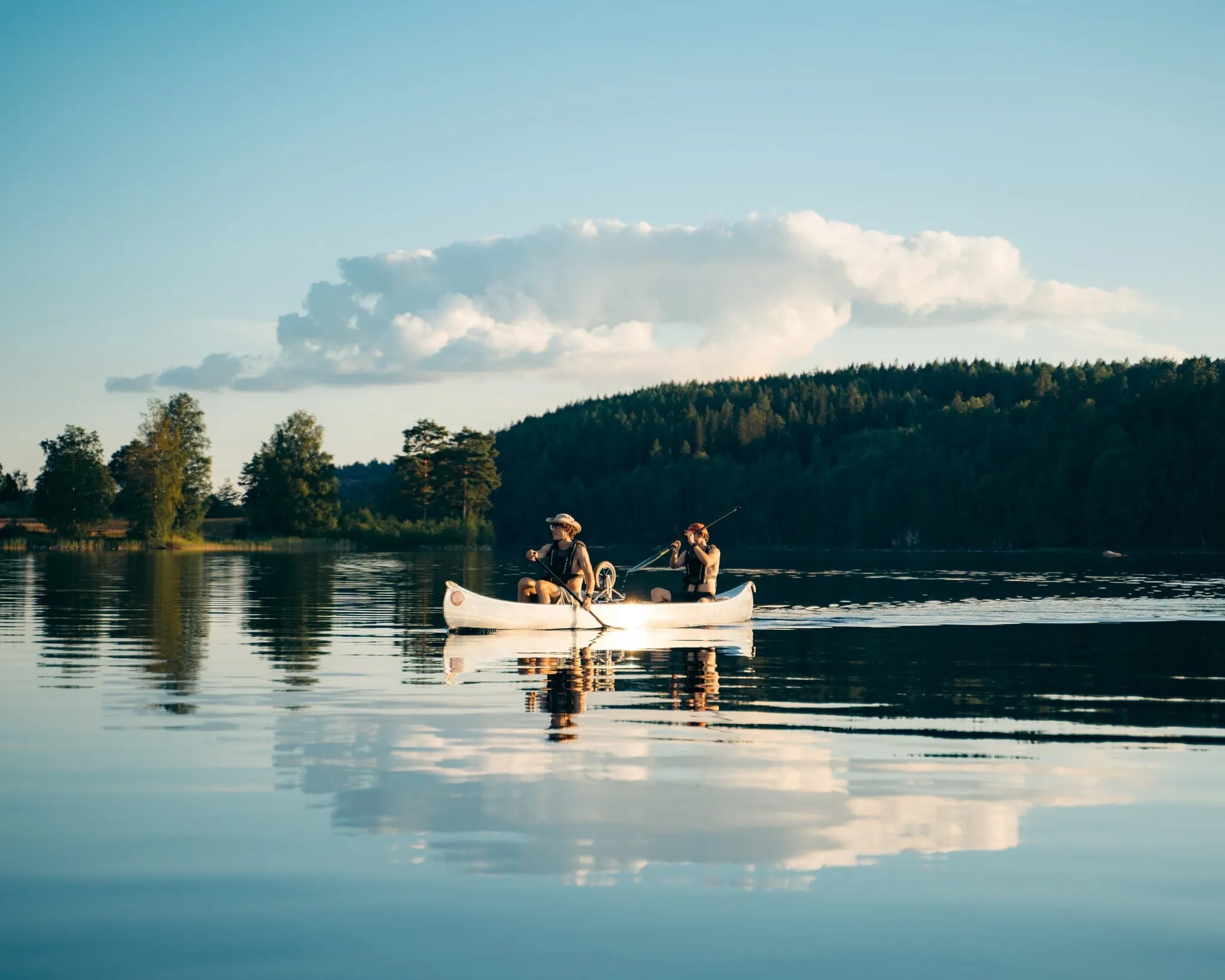
Dalsland’s lakes are still water: no current, no rapids on the main routes, and about a hundred campsites along the way. The difficulty comes from the weather and from how far you choose to go.
How far you paddle in a day
A loaded Canadian canoe with two adults moves at a walking pace, around 4 km/h on calm water. Wind, breaks and loading and unloading take the rest of the day.
| Who | Distance per day | Hours on the water |
|---|---|---|
| First-timers, or a family with young children | 8–12 km | 2–4 |
| Fit adults new to canoeing | 12–18 km | 3–5 |
| Experienced paddlers | 20–25 km | 5–7 |
Västsverige, the regional tourist board, describes a full day of about 25 km on Lelång as suitable for beginners. That is a day trip with an empty canoe. With a week’s food, tent and barrels on board, most groups enjoy themselves more at half that. A 3-day round trip of 40–50 km, or an 8-day tour of 100–130 km, works out at 13–17 km a day. Route ideas with distances are in Which canoe routes can you paddle in Dalsland?.
Wind on the big lakes
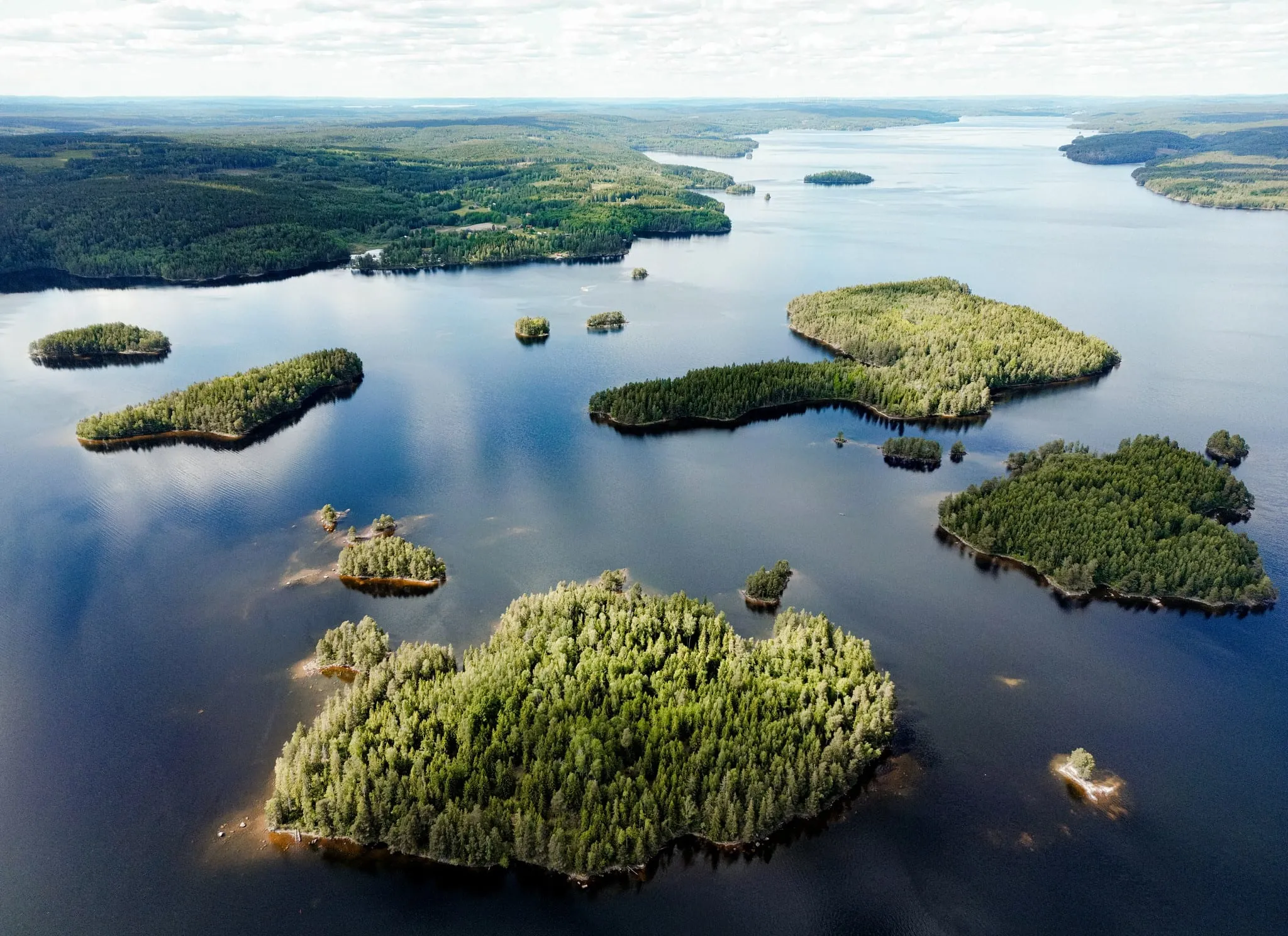
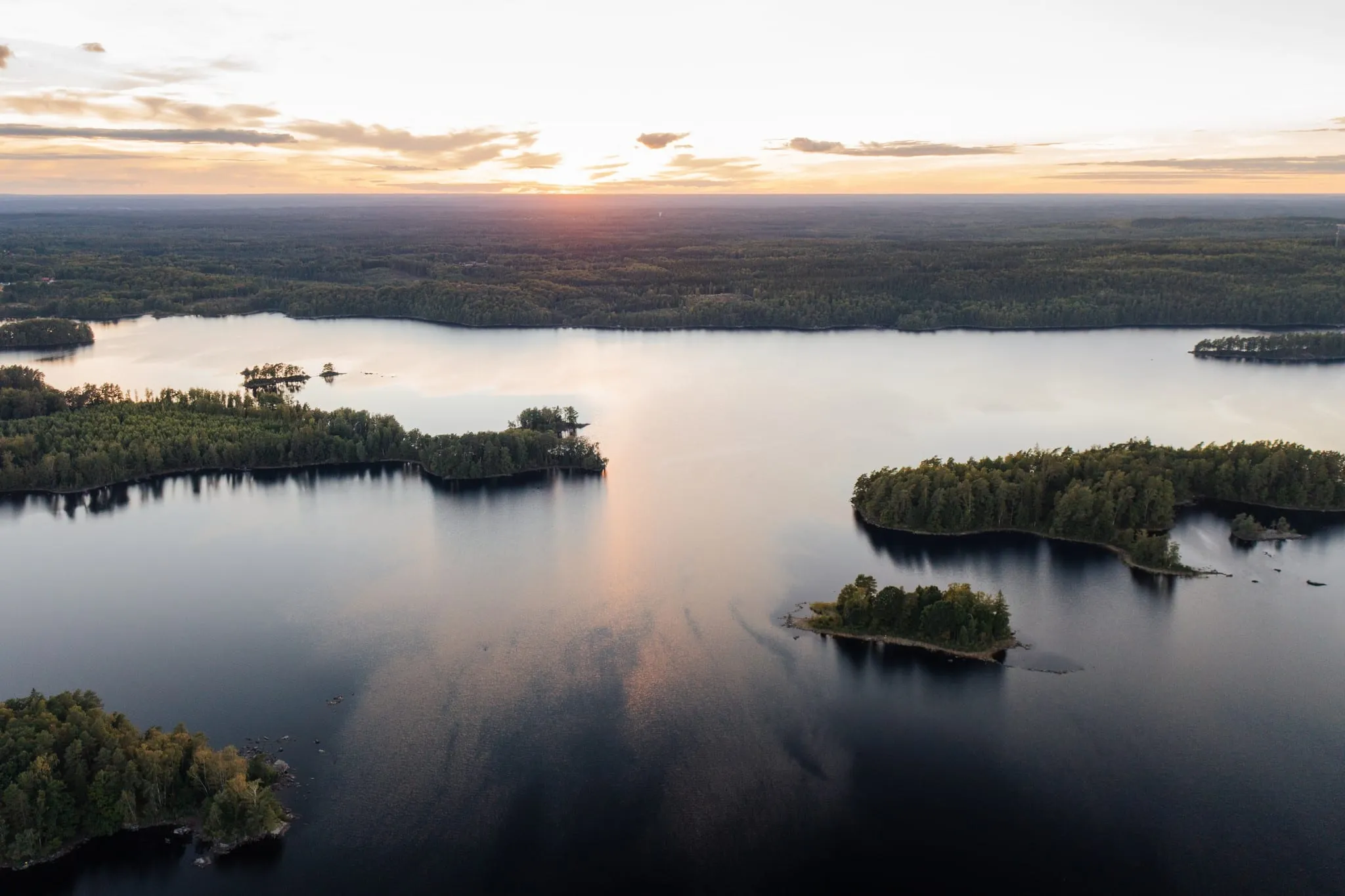
Wind turns an easy day into a hard one. The lakes here are long and narrow: Lelång runs about 40 km and is at most 2.4 km wide, and Stora Le runs about 70 km along the Norwegian border. When the wind blows along the length of a lake like that, waves build over many kilometres of open water.
In practice:
- Headwind costs time. A day into a strong headwind can take twice as long as the same distance in calm weather.
- Follow the shore. In wind, paddle close to the bank and use islands for shelter. A crossing that is fine in the morning can be unpleasant a few hours later.
- Cross short, cross early. If you have to cross open water, choose the narrowest point and do it before the wind picks up.
- Check the forecast every day. SMHI, the Swedish weather service, gives wind speed and gusts per location. Plan the next day’s direction on it.
- Keep a spare day. On a week’s trip, plan one day with no fixed distance so you can sit out a windy one.
This is also why your base matters. From a base where several lakes meet, you can pick the lake with the least wind that morning. From the end of a long lake you paddle into whatever the wind brings.
Portages and canoe wheels
On the main routes the Dalsland Canal locks lift you between lakes, so you rarely carry the canoe at all. Portages come in three cases: when a lock is closed, when you choose a side lake without a lock, and on small connections between lakes.
Canoe wheels turn a portage from a carry into a push. You strap the canoe on a small trolley, leave the barrels in, and roll it along the path. Two people can then move a loaded canoe a few hundred metres without lifting more than one end. Rental bases offer wheels as an extra; the Outpost North canoe package includes them.
Rough or steep paths are still hard work. If your fitness or back is a concern, plan a route that follows the locks. How the locks work, and when they open, is in How do you canoe through the locks of the Dalsland Canal?.
Swimming and life jackets
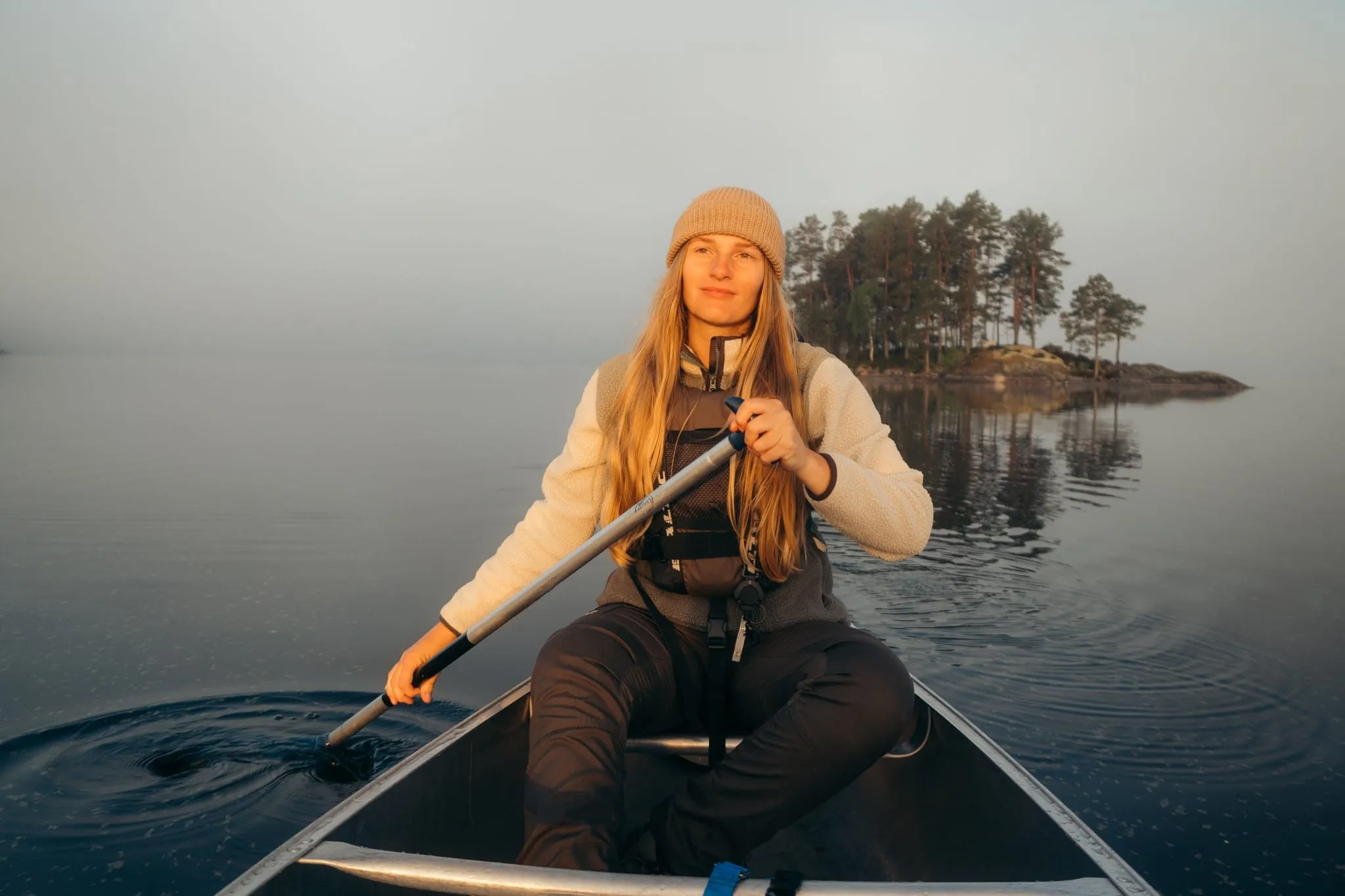
Everyone in the canoe should be able to swim and wear a life jacket on the water at all times. The lakes are deep (Lelång averages about 60 m) and cold early and late in the season. The Swedish Canoe Federation’s safety card warns about cold-water shock: the first minute after falling in is when people breathe in water, so keep your head up and move slowly.
Practical rules that keep a canoe upright:
- Stay low, and step into the middle of the canoe, never onto the edge.
- Pack heavy things low and in the centre.
- Keep your phone in a waterproof case, and know that the emergency number in Sweden is 112.
Children and non-swimmers should wear a proper life jacket with a collar that keeps the head up, in the right size. Ask your rental for children’s sizes when you book.
Children
Dalsland suits families well. The water is still, the campsites have toilets and fire pits, and children under 12 use the DANO campsites for free. See Do you need a nature card?.
What works with children:
- Short days (8–12 km) and long stops on beaches and islands.
- A lake without locks for the first trip, such as a round trip on Västra Silen.
- Most canoes take 2–3 people, so one or two young children can sit between two adults. Older children often prefer their own kayak.
- Swimming, fishing and fire as the point of the day, with paddling as the way to get there.
Dogs
Dogs can come along. Sweden has a leash rule from 1 March to 20 August, when wild animals have their young, so your dog stays on a leash on land for most of the paddling season. In the canoe, a dog that sits still is easy; one that jumps out at every bird is not. Try a short trip first, and bring a dog life jacket.
Who should think twice
- People who cannot swim and do not want to wear a life jacket all day.
- Anyone who needs every day to go to plan: wind can keep you on land.
- Groups who want to cover a lot of ground with a short holiday. Pick a shorter route instead.
Our pick for beginners
Outpost North in Gustavsfors is a good start for a first trip. It sits between Lelång and Västra Silen, so you can choose a sheltered lake on the day; its canoe package includes canoe wheels, a route in an app and a map; and the staff give a safety briefing and help plan the route. If you want everything sorted, The Canoe Trip starts there with canoe, wheels, map, nature card, an English briefing and support during the trip included.
Sources
Västsverige: paddle a canoe on Lelång, Västsverige: paddling in Dalsland, Svenska Kanotförbundet: safe paddling card (Swedish), SMHI: weather forecasts, Naturvårdsverket: dogs in nature, DANO: nature conservation card, Outpost North: canoe tours, Wikipedia: Lelång, Wikipedia: Stora Le (Swedish).